Time for light-duty trucks to scale?

blizzard2014

Veteran Expediter
Driver
If we were jealous of all the magnificence of van driving... the laziness, the scraping of pennies due to overcrowding, the glory of Sprinter repair... wouldn't we just get one ourselves, Turtle?

You're being vehicle racist now. Can I call someone a bigot for hating one type of truck while embracing another? I'm just messing with ya!
 

xmudman

Veteran Expediter
Owner/Operator
I haven't named my source because 1. I didn't ask permission to quote him, and 2. I'm still contracting with his company and wish to continue doing so.

Is he pulling my leg? Mebbe; after al, I AM a n00b. OTOH, maybe he meant to say (or I misheard him) that there are 650 new trucks out there. The number of new carriers isn't the important thing, it's the sheer number of new vehicles in an already-crowded van market.

All I know is, to quote Bob Seger, "somewhere somebody ain't doing somebody right".....

Sent from my SCH-I110 using EO Forums mobile app
 

blizzard2014

Veteran Expediter
Driver
I wasn't trying to attack you or anything xmudman. I was merely pointing out the money and legwork that would be involved in such an endeavor. He probably meant that there are 650 more trucks on the market. It's a rough gig driving a van. But money can be made. I also agree that some of the smaller "renegade carriers" out there need to be monitored a little bit more. Also, there are a lot of unsafe driving situations that cargo van drivers are pushed into. I don't care who jumps all over me for saying it; running yourself ragged because you don't have to fill out a logbook is unsafe. It happens all of the time.

Some drivers die because they don't know their own limitations. Some drivers drive unsafe just to make an extra couple of dollars. There is no one regulating them except a select handful of the larger carriers like, FedEx, Tri-State, and Panther who put mileage restrictions on their cargo vans. I'm not saying more government regulation is the answer here, just some more carrier common sense. That also applies to the use of overloaded Penske trucks and drivers who can't read and write in English.
 

xmudman

Veteran Expediter
Owner/Operator
FWIW, I'm not calling for CV's to be brought under the same regulatory scheme as big trucks (CDL's, etc); if they were, I'd be purged along with the "cubies". I just think cubes should be weighed. It will not happen, though; imagine the stink Penske, UHaul, etc would raise if Ma & Pa Kettle couldn't rent cubes to move.

Sent from my SCH-I110 using EO Forums mobile app
 

tknight

Veteran Expediter
FWIW, I'm not calling for CV's to be brought under the same regulatory scheme as big trucks (CDL's, etc); if they were, I'd be purged along with the "cubies". I just think cubes should be weighed. It will not happen, though; imagine the stink Penske, UHaul, etc would raise if Ma & Pa Kettle couldn't rent cubes to move.

Sent from my SCH-I110 using EO Forums mobile app

Rental trucks are exempted from scales as long as your moving your own furniture anything else is scale able even your local polka band if they are getting paid for a job.
 

tknight

Veteran Expediter
enforcing that is certainly a problem!!! cube vans should scale in most states as some are way over 8-10k required to scale
 

Turtle

Administrator
Staff member
Retired Expediter
If we were jealous of all the magnificence of van driving... the laziness, the scraping of pennies due to overcrowding, the glory of Sprinter repair... wouldn't we just get one ourselves, Turtle?
Almost certainly, yes. But I don't think very many straight truck drivers are jealous of all the magnificence of van driving.

It's just that some (many?) CMV drivers, those who don't understand the reasons for HoS logging and scaling in the first place, are jealous that those little pіssant van drivers get to haul freight without being subjected to the same regulations.

It's reminiscent of the van drivers who are jealous of others who have figured out a way to cut costs further and enter the business cheaper and easier with Penske trucks.
 

beachbum

Veteran Expediter
Owner/Operator
And if you made cargo vans scale and log, the first thing they would do is just buy a bigger truck and enter the straight truck freight market. That's what I would do since there would not be an advantage to driving a van anymore for anyone.
 

beachbum

Veteran Expediter
Owner/Operator
For some out there being overweight in a cargo van is different then being in a commerical vehicle.
 

tknight

Veteran Expediter
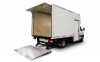
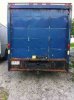
Any ideas what the gvw of a sprinter set up like this might be, and what the payload would be, it looks to be a 3500 however with liftgate door and box along with other stuff it might be next to 000 payload?
tkImageUploadedByEO Forums1368545441.071857.jpg
 

xmudman

Veteran Expediter
Owner/Operator
A dually Sprinter van grosses as high as 11030, IIRC. I think the cutaway has the same GVW.

Sent from my SCH-I110 using EO Forums mobile app
 

xiggi

Veteran Expediter
Owner/Operator
A dually Sprinter van grosses as high as 11030, IIRC. I think the cutaway has the same GVW.

Sent from my SCH-I110 using EO Forums mobile app

Outfitted can retag so the gvw on that could vary widely.

Sent from my Fisher Price ABC-123.
 

Turtle

Administrator
Staff member
Retired Expediter
"consequences. Always."

I am wondering, not saying that new regulations would help or hurt anything, but what are the "unintended consequences" of doing nothing?
By definition, there are none. Unintended consequences are unanticipated or unforeseen outcomes that are not the ones intended by a purposeful action.

So, the question becomes, what are the costs of unintended consequences versus the cost of doing nothing?

As an example, one that I'm sure you can understand is, what are the costs of the unintended consequences of gun control laws, versus the cost of no gun control laws? The answer is an easy one - the unintended consequences of gun control laws is that we now have irresistible magnets that draw armed lunatics into schools, movie theaters and shopping malls where guns are banned, there are more gun-related deaths, people are generally less safe, and tax dollars are wasted in trying to enforce the unenforceable. In addition, gun control legislation (and the threats thereof)
have created a need for more people to want guns, and has resulted in a massive increase in gun permits, and gun and ammo purchases, has resulted in more guns on the streets, not less, just the opposite intention of the gun laws. The cost of doing nothing is people go about their daily lives while having their liberty in tact, fewer gun-related deaths, and fewer mass shootings.

Other examples include the ever-popular, warm-and-fuzzy, feel-good Americans with Disabilities Act, which made it more costly to hire people with disabilities and therefore reduced their employment numbers, the endangered species act has actually resulted in increased habitat destruction, fire prevention policies that reduces forest diversity and increases mass fires, dam building to control flooding that destroys wet lands and makes floods more likely, more frequent, and more devastating than if left alone.

The law of unintended consequences
is what happens when a simple system tries to regulate a complex system. The political system is simple, it operates with limited information (rational ignorance), short time horizons, low feedback, and poor and misaligned incentives. Society in contrast is a complex, rapidly evolving, high-feedback, incentive-driven system. When a simple system tries to regulate a complex system you always get unintended consequences.

All of the factors are important, but really the bottom line keys on both sides of the equation is incentive. Complex systems are always incentive-driven, either by what is the path of least resistance or the most beneficial. Attempts to regulate the complex are always driven by incentives that are incongruous, incentives that try to alter the path of least resistance or the most beneficial, as the
incentives they try to regulate are complex and constraints are constantly changing, so even good-intentioned incentive-driven regulations will have unintended consequences.

So, what are the unintended consequences of requiring box trucks and cargo vans to be regulated? I certainly do know them all, no one does, but off the top of my head I'd say more scale houses and more people to man them, which will give them more opportunities to hand out high dollar citations for burned out license plate bulbs to big and straight trucks, more tax dollars needed to cover the costs of the increased inspections, increased insurance rates for carriers and drivers, increased paperwork and staffing at carriers to handle it all, and reduced rates to trucks hauling the freight. And those are likely just the tip of the iceberg.
 

Tennesseahawk

Veteran Expediter
Almost certainly, yes. But I don't think very many straight truck drivers are jealous of all the magnificence of van driving.

It's just that some (many?) CMV drivers, those who don't understand the reasons for HoS logging and scaling in the first place, are jealous that those little pіssant van drivers get to haul freight without being subjected to the same regulations.

It's reminiscent of the van drivers who are jealous of others who have figured out a way to cut costs further and enter the business cheaper and easier with Penske trucks.

The Penske trucks don't bother me, as much as the stereotypical drivers who like to ignore the laws do.

But I do loves me some goulash!
 

tknight

Veteran Expediter
thats the funny part the name of the carrier was quality! guess it leaves rust with every chuck hole.
 

mjmsprt40

Veteran Expediter
Owner/Operator
I have a question. Just giving this thread the quick once-over, I have to ask how much of the desire to regulate light trucks/CVs has anything to do with safety-- which, some folk DO push the envelop to the braking point, you know good and well that those "Tonka Trucks" are way over 10K regardless of what the door sticker says-- and how much of this is fueled by the greedy desire to eliminate competition? I'd have to say, based on what I read here and on some other threads, that greed has more than a little to do with it.

Regulating would, of course, get the violators either off the road or shaped up, one of the two. The other, hoped for by more than a few here effect, would be to make CVs in general so unprofitable that no one running them could stay in business. It's been mentioned before that CVs have profitability because they aren't regulated, if they were then they could not compete-- so it is hoped by the "regulations for all" crowd-- with dock-high trucks and would be driven out of business. With less competition, you hope to have more freight for yourself and to be able to drive prices up through supply-and-demand forces.

I have a suspicion that the powers-that-be really don't want the burden of having to regulate everybody any more than everybody is clamoring for the opportunity to be regulated. Imagine the really impossible lines if every pickup, panel van and utility vehicle had to go through every weigh station with the "Big Boys". You'd have lines that would be enormous, and many of the same folk who are calling for universal regulation now would be slapping their heads and saying "What in God's Name was I thinking" if the government ever does do what you request here.

The other thing likely to happen, in today's job market, is that a number of the folk that you so generously want to drive out of business will go on the public dole. Really, what else can they do? Then, you'll all pile down to the Soapbox, screaming and yelling about all those deadbeats who are taking tax dollars out of your pocket. Too bad, pal-- that's the breaks, and you can't drive people out of business without some of those people ending up on welfare in this economy. At least this way, they're trying to pay their own way. Maybe you might consider helping them, instead of figuring out how to drive them under. Just a thought.
 
Top