
Fuel for Thought
Tired of Premature Wear?
Tires are one of the biggest expenses for an owner‑operator. If you want to give them a fighting chance at longevity, you have to care for them properly from day one. Once a problem or wear pattern starts, it usually can’t be corrected. Tires don’t “heal.” They just keep wearing the way they started.
Wheel balancing isn’t complicated, but it’s one of those things that quietly affects everything about how your truck runs. You don’t think about it when it’s right, but you definitely notice it when it’s wrong. Vibration, odd wear, tires that don’t last as long as they should—it all ties back to how well everything is lined up and running true.
Most people start and stop with the basic static balance. Throw the tire on the machine, spin it, hammer or stick some weights on the rim, and call it good. That’s fine, and it works, but it’s a one‑time fix. As the tire wears, picks up debris, changes over time, or the weights fall off, that “perfect” balance slowly fades. Nothing adjusts itself.
That’s where Centramatics come in. They mount behind or between the wheels and balance continuously as you drive. They react to whatever’s happening—tread wear, road junk, all of it. They’re always working, always correcting. You don’t have to think about them, and they don’t care what the tire looked like when it left the shop. They just keep things smooth.
For best results, it’s still a good idea to get the tires balanced before installing Centramatics. Most shops will get them “close” to zero, and the Centramatics can clean up the last little bit. It also gives you room for the changes that happen as the tire ages. If the Centramatics have to correct for four to six ounces right from the start, they have less room to deal with rocks in the tread or chunks of missing rubber from potholes later.
But here’s the part a lot of drivers miss: none of that matters if the wheels aren’t centered on the hub to begin with.
If the wheel isn’t centered, it’s never going to run true. It’ll wobble, it’ll scrub, and it’ll wear unevenly. And with duals, if the inner and outer wheels aren’t lined up with each other, they’re basically fighting the whole time they’re rolling. Even a perfectly balanced tire won’t save you from that.
There are a couple of ways to deal with this. One is centering sleeves. You screw them onto three studs while mounting the wheel, get everything lined up, put the other seven lugs on, tighten those seven, remove the sleeves, and add the last three. They help. They’re better than nothing. But they still allow a little movement as you drive, and that little bit is enough to throw things off. Even properly tightened wheels can “clock” in the small gap between the stud and the wheel holes under the right conditions.
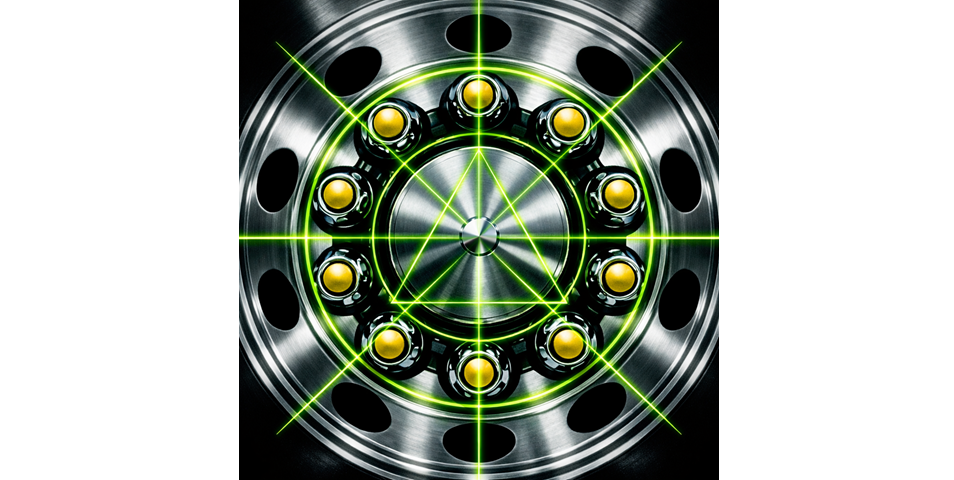
The better option is centering lugs. These stay on the truck full‑time. They don’t get removed, they don’t rely on you remembering to use them, and they don’t shift. They keep the wheel centered every single time it’s mounted. No guessing. No “close enough.” Just centered, every time. When the wheel is centered, everything else—balance, alignment, tire wear—has a solid starting point.
Pairing centering lugs with Centramatics is a strong combination. One keeps the wheel mounted true, the other keeps it balanced as conditions change. Together, they help extend tire life and keep the ride smooth without you having to babysit anything.
But even with perfect alignment and perfect balance, tire pressure can undo all of it.
If your pressures aren’t accurate, you’re going to see irregular wear, heat buildup, and shorter tire life. TPMS helps you keep an eye on things, but it doesn’t inflate the tires for you. HALO systems can handle that on drives and trailers, but you still need to check them, and there’s no HALO system for steer tires. At the end of the day, it’s still on you to make sure the pressures are right.
If you want to get the most miles out of your tires, it really comes down to the basics: keep the pressures accurate, watch for irregular wear, keep the alignment in check, make sure the wheels are centered with centering lugs, and let the Centramatics handle the balancing while you drive.
Do that consistently, and your tires will last longer, your ride will smooth out, and you’ll spend less money replacing rubber before its time.
The center is the most important part of the wheel.
- Lao Tzu
See you down the road,
Greg