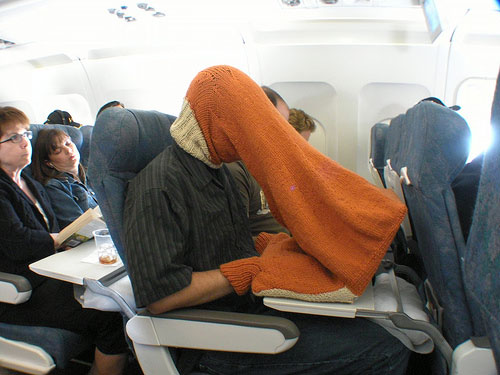
Microsoft researcher Danah Boyd argues in this article that 'The people who most heavily rely on pseudonyms in online spaces are those who are most marginalized by systems of power.' This comes in the wake of criticism aimed at Facebook and Google for their "real names only" stance on anonymity and pseudonymity.
The EFF has a Blog post about what appears to be Facebook's stance on anonymity on the Internet. Speaking last week at a social media conference hosted by Marie Claire magazine, Facebook's Marketing Director, Randi Zuckerburg, is quoted: "I think anonymity on the Internet has to go away. People behave a lot better when they have their real names down. I think people hide behind anonymity and they feel like they can say whatever they want behind closed doors." This position appears to apply to the entire Internet, not just Facebook (which already requires that its users post real names instead of pseudonyms). The EFF goes on to point out how this would be a bad choice for civil liberties online.
A security expert has panned Google's "real name" policy on Google+, claiming that the hard line will damage privacy. Sophos's Chester Wisniewski says that closing accounts where users have adopted false names erodes privacy on the social network. "What they seemed to have missed is that the very foundation of privacy is identity. Simply knowing my postal code or birth date is meaningless without a name to associate it with. By requiring people to only use their real names, unless they just happen to be a celebrity, they have eliminated the ability for people to be private in any meaningful way."
This article from the Atlantic discusses just how revolutionary the real name requirement really is. It's something that's never really been a part of our lives until very recently. You may thing it's something that's always been there, but as this article shows, it really hasn't been at all. It's a fundamental shift in how we will live our lives, and more importantly, how we even think. I encourage you to read the articles at each link above, but if you choose to click just one, make it the one in this final paragraph.
The EFF has a Blog post about what appears to be Facebook's stance on anonymity on the Internet. Speaking last week at a social media conference hosted by Marie Claire magazine, Facebook's Marketing Director, Randi Zuckerburg, is quoted: "I think anonymity on the Internet has to go away. People behave a lot better when they have their real names down. I think people hide behind anonymity and they feel like they can say whatever they want behind closed doors." This position appears to apply to the entire Internet, not just Facebook (which already requires that its users post real names instead of pseudonyms). The EFF goes on to point out how this would be a bad choice for civil liberties online.
A security expert has panned Google's "real name" policy on Google+, claiming that the hard line will damage privacy. Sophos's Chester Wisniewski says that closing accounts where users have adopted false names erodes privacy on the social network. "What they seemed to have missed is that the very foundation of privacy is identity. Simply knowing my postal code or birth date is meaningless without a name to associate it with. By requiring people to only use their real names, unless they just happen to be a celebrity, they have eliminated the ability for people to be private in any meaningful way."
This article from the Atlantic discusses just how revolutionary the real name requirement really is. It's something that's never really been a part of our lives until very recently. You may thing it's something that's always been there, but as this article shows, it really hasn't been at all. It's a fundamental shift in how we will live our lives, and more importantly, how we even think. I encourage you to read the articles at each link above, but if you choose to click just one, make it the one in this final paragraph.